Get a lithuanian IP address
Learn practical ways to get a Lithuanian IP address for browsing, streaming, and privacy.
Getting a Lithuanian IP address is a common goal for privacy, streaming availability, and regional access. Whether you’re traveling, working remotely, or simply testing geolocation, there are several solid paths to obtain a Lithuanian IP. This guide breaks down the options, what to expect, and how to implement them effectively.
Why you might want a Lithuanian IP address
- Access Lithuanian services: Some local banking apps, streaming libraries, or government sites require a Lithuanian IP.
- Privacy and security: Masking your real location can reduce tracking and fingerprinting.
- Business testing: Developers and marketers test geo-sensitive features for Lithuania.
- Compliance and data residency: In some cases, you need to appear as if you’re browsing from within Lithuania for regulatory or testing purposes.
Understanding why you want the IP helps you choose the right tool and level of risk.
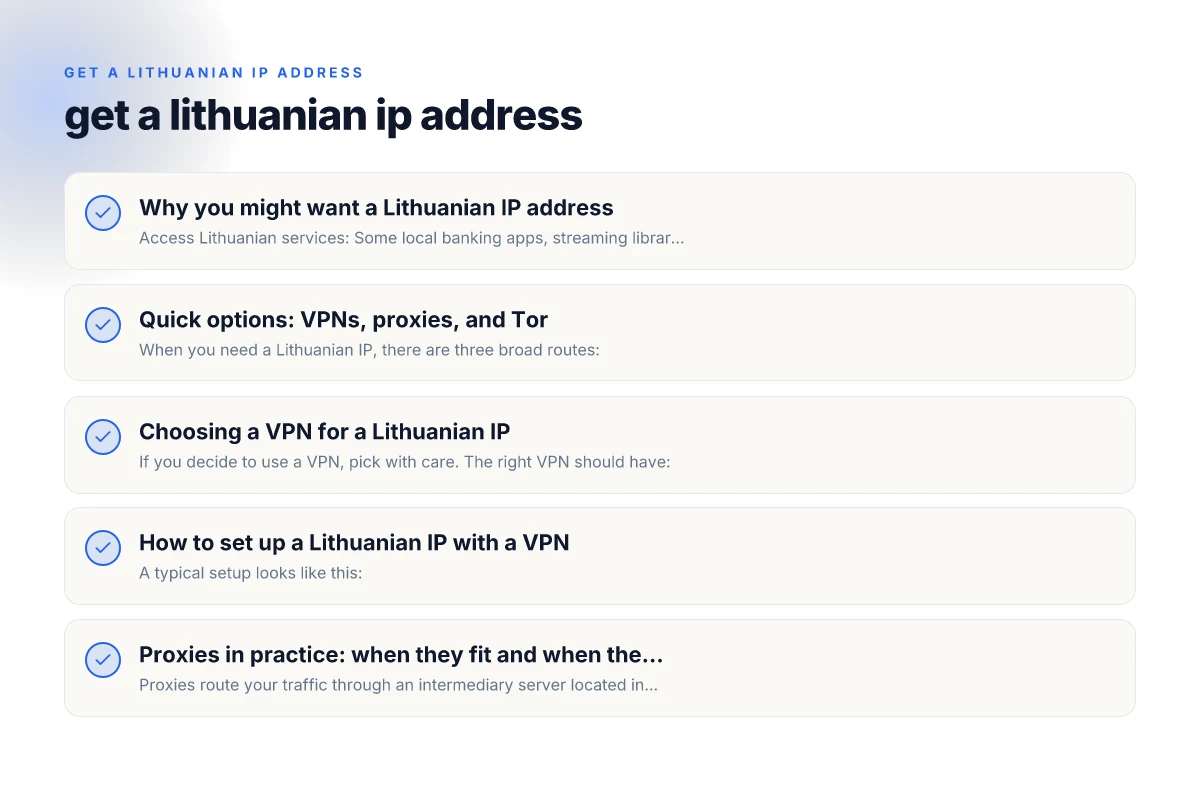
Quick options: VPNs, proxies, and Tor
When you need a Lithuanian IP, there are three broad routes:
- VPN (Virtual Private Network)
- Pros: Easy to use, strong encryption, reliable speed with a Lithuanian server, apps for most devices.
- Cons: Some sites block VPNs, cost monthly, potential latency depending on route.
- Proxy
- Pros: Simple to set up for specific apps or browser extensions, often free or cheap.
- Cons: Limited privacy (no encryption by default unless using HTTPS proxy), less reliable, many proxies are overused or blacklisted.
- Tor
- Pros: Strong anonymity, avoids centralized tracking, free.
- Cons: Significantly slower, some sites block Tor exit nodes, not ideal for streaming or heavy tasks.
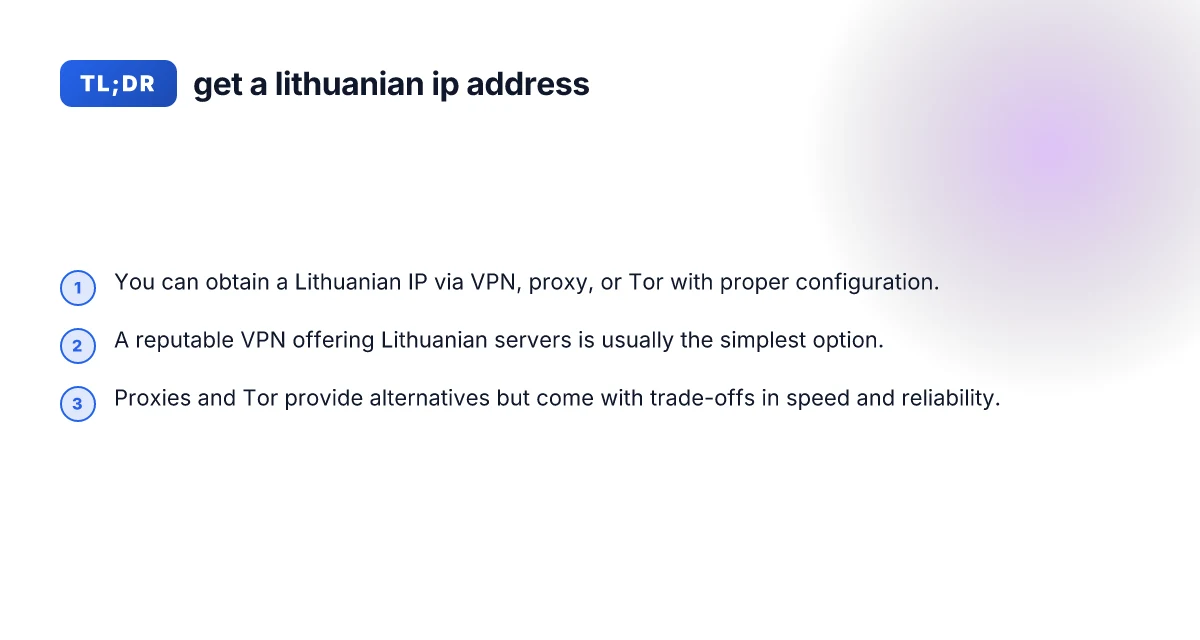
For most people who want a dependable Lithuanian IP for browsing and streaming, a reputable VPN is the best balance of privacy, speed, and ease of use. Proxies and Tor are useful in niche cases or when you’re prioritizing anonymity over performance.
Choosing a VPN for a Lithuanian IP
If you decide to use a VPN, pick with care. The right VPN should have: Get a latvian IP address
- Lithuanian server presence: A server physically in Lithuania or highly reliable virtual presence in the region.
- Strong encryption and a no-logs policy: AES-256, modern protocols (OpenVPN, WireGuard, iKEv2), transparent privacy policy.
- Good speed and low latency: Fast connections with minimal impact on your usual online tasks.
- Reliable DNS leak protection: Prevents your real location from leaking even if the VPN drops.
- Kill switch: Cuts your internet if the VPN disconnects to avoid accidental exposure.
- Compatibility: Apps for Windows, macOS, iOS, Android, plus browser extensions if needed.
- Customer support: Accessible support for setup issues or server problems.
- Independent reviews: Positive external assessments reduce the risk of “fake” claims.
Commonly recommended use cases:
- Streaming Lithuanian services or accessing region-restricted content
- Secure remote work or browsing while traveling
- Testing location-based features from Lithuania
If you expect to access high-demand streaming libraries, verify that the VPN has a track record of working with those services, and watch for potential throttling or IP blocking.
How to set up a Lithuanian IP with a VPN
A typical setup looks like this:
- Subscribe to a VPN service with a Lithuanian server.
- Install the app on your device (PC, phone, tablet, or router-capable device).
- Open the app and connect to a Lithuanian server.
- Optional: enable a kill switch and DNS leak protection.
- Verify your IP: visit a site like whatismyipaddress.com to confirm the country shows Lithuania.
Tips for best results: Get a korean IP address in the UK
- If a single Lithuanian server is slow, switch to another server in the same country.
- Use WireGuard where possible for speed and modern cryptography.
- Clear cache or use a private/incognito window if you’re testing access to specific sites.
- Some streaming services are vigilant about VPN traffic. If you have trouble, try a different protocol or server.
Proxies in practice: when they fit and when they don’t
Proxies route your traffic through an intermediary server located in Lithuania, but there are important caveats:
- Works well for lightweight tasks: Browsing, testing geolocation, or avoiding basic IP-based tracking.
- Encryption caveat: Most proxies don’t encrypt your data unless you’re using an HTTPS proxy, which still depends on the site’s TLS.
- Performance variability: Proxies can be slower or inconsistent because they often have overloaded endpoints.
- Privacy considerations: A proxy can see your traffic unless the connection is end-to-end encrypted.
If you use a proxy, consider only non-sensitive tasks and combine with HTTPS where possible. For sensitive activity, VPN is safer due to encryption and better privacy protections.
Tor: anonymity with Lithuanian exit considerations
Tor can help you appear as if you’re browsing from Lithuania by choosing a Lithuanian exit node. However:
- Anonymity-first: Tor is excellent for privacy, but it can be slow for streaming or large downloads.
- Exit node variability: You’re at the mercy of exit-node quality and speed, which can fluctuate.
- Website blocks: Some sites detectTor and block access, or require extra verification.
- Browser fingerprinting: Even with Tor, some sites can track you via fingerprinting if you adjust settings.
Tor is a strong option if anonymity and avoiding tracking are your top priorities and you don’t mind slower connections. Get a korean IP address in new zealand
A quick comparison: VPN vs proxies vs Tor
Here is a concise comparison to help you choose:
- VPN
- Encryption: Yes
- Speed: Generally fast
- Reliability: High
- Privacy: High (depends on provider)
- Lithuanian IP availability: Common and reliable
- Best for: Streaming, secure browsing, remote work
- Proxy
- Encryption: Optional (usually no)
- Speed: Variable
- Reliability: Moderate
- Privacy: Low to moderate
- Lithuanian IP availability: Often available
- Best for: Lightweight tasks, geo-testing, non-sensitive browsing
- Tor
- Encryption: End-to-end encryption within Tor, but exit node visible to the outside
- Speed: Slow
- Reliability: Variable
- Privacy: High for anonymity
- Lithuanian IP availability: Possible but depends on exit nodes
- Best for: Strong anonymity, anti-surveillance tasks
Table: quick side-by-side
| Method | Encryption | Speed | Reliability | Privacy | Lithuanian IPs | Best use-case |
|---|---|---|---|---|---|---|
| VPN | Yes | High | High | High | Yes | Streaming, work, general browsing |
| Proxy | Optional | Variable | Moderate | Low | Yes | Lightweight tasks, geo-testing |
| Tor | Yes within Tor | Low | Variable | High | Possible but slow | Strong anonymity, anti-surveillance |
Practical tips to improve success with a Lithuanian IP
- Use a reputable, audited provider: Read independent reviews and privacy reports.
- Test multiple servers: Lithuania may have several city-locations. Test which one works best for your task.
- Check for DNS leaks: Regularly verify that your DNS requests aren’t leaking your real location.
- Consider split tunneling: Route only sensitive apps through the Lithuanian IP, while keeping other traffic direct to preserve speed.
- Verify content access: Some sites detect VPNs aggressively. Rotating servers or changing protocols often helps.
- Be mindful of legality and terms of service: Using a Lithuanian IP for restricted activities may violate terms in some contexts.
Security and privacy considerations
- Data logging: Even if a service claims not to log, review their privacy policy for data retention, data sharing, and jurisdiction.
- Jurisdiction: The provider’s location matters for data requests and watchdogs. Choose a provider with transparent practices.
- Device security: Use strong device security (passwords, up-to-date OS) in addition to a VPN or Tor for safer browsing overall.
- Public networks: When on untrusted networks, a VPN adds essential protection against eavesdropping.
Final recommendations
If your primary goal is reliable access to Lithuanian content and general online privacy, choose a reputable VPN with Lithuanian servers. It offers a straightforward setup, strong protection, and good performance for everyday use. Proxies and Tor have their places, for instance, Tor is best when anonymity is paramount and you can tolerate slower speeds. Proxies can be useful for quick, low-risk tasks when you need a simple setup. Always test and compare a few options to see which one best fits your needs.
If you’re just starting out and want a concrete, practical path: pick one well-known VPN with Lithuanian servers, install the app on your main devices, connect to a Lithuanian server, and verify your IP. From there, you can fine-tune settings, try additional servers, and decide if you want to add Tor for higher anonymity or a proxy for quick, low-stakes tasks. Get a korean IP address: how to access Korean content and services