Free book: where to find legitimate, high-quality free books online
A practical guide to finding legal, high-quality free books across genres and formats.
Free books can be found in surprising abundance if you know where to look. This guide breaks down legitimate sources, best practices, and practical tips to access high-quality free reading material across formats and genres.
Where free books come from
Free books aren’t a party trick. They’re a mix of licensing, promotions, and public domain content. Here are the main sources you’ll encounter:
- Public domain: Works whose copyright has expired or been forfeited, making them free to download and share.
- Library lending: Digital lending programs that let you borrow ebooks and audiobooks for a limited period.
- Author and publisher promotions: Free first chapters, novellas, or full works offered to attract new readers.
- Open access and Creative Commons: Books released with licenses that allow free distribution and reuse under certain conditions.
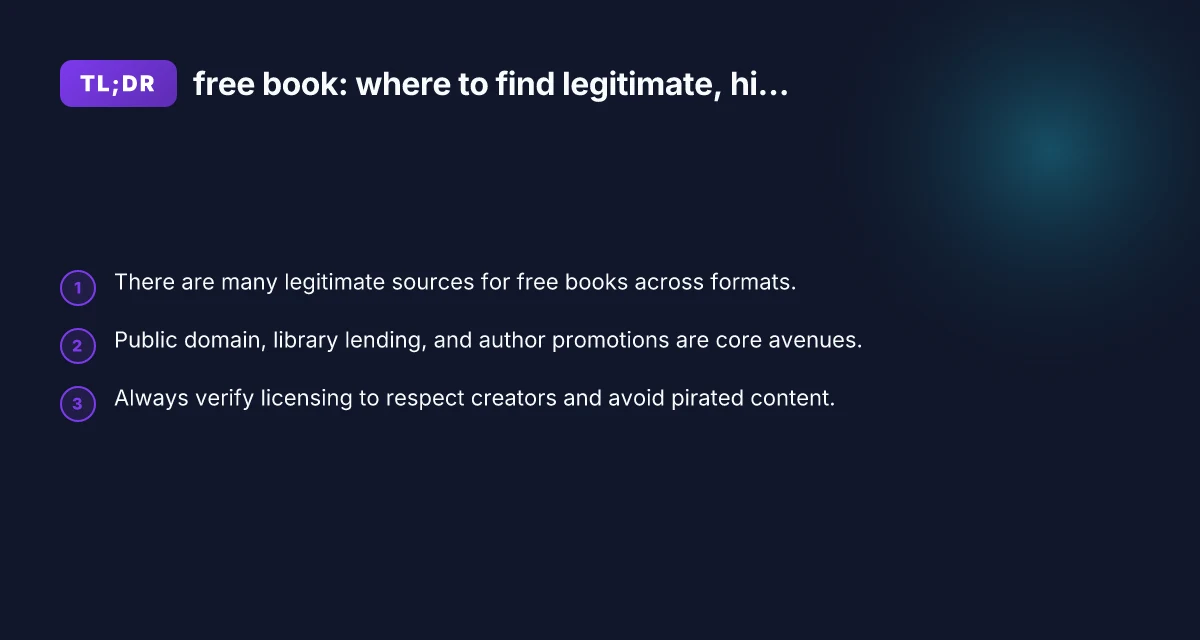
Understanding these sources helps you navigate the options without veering into pirated content.
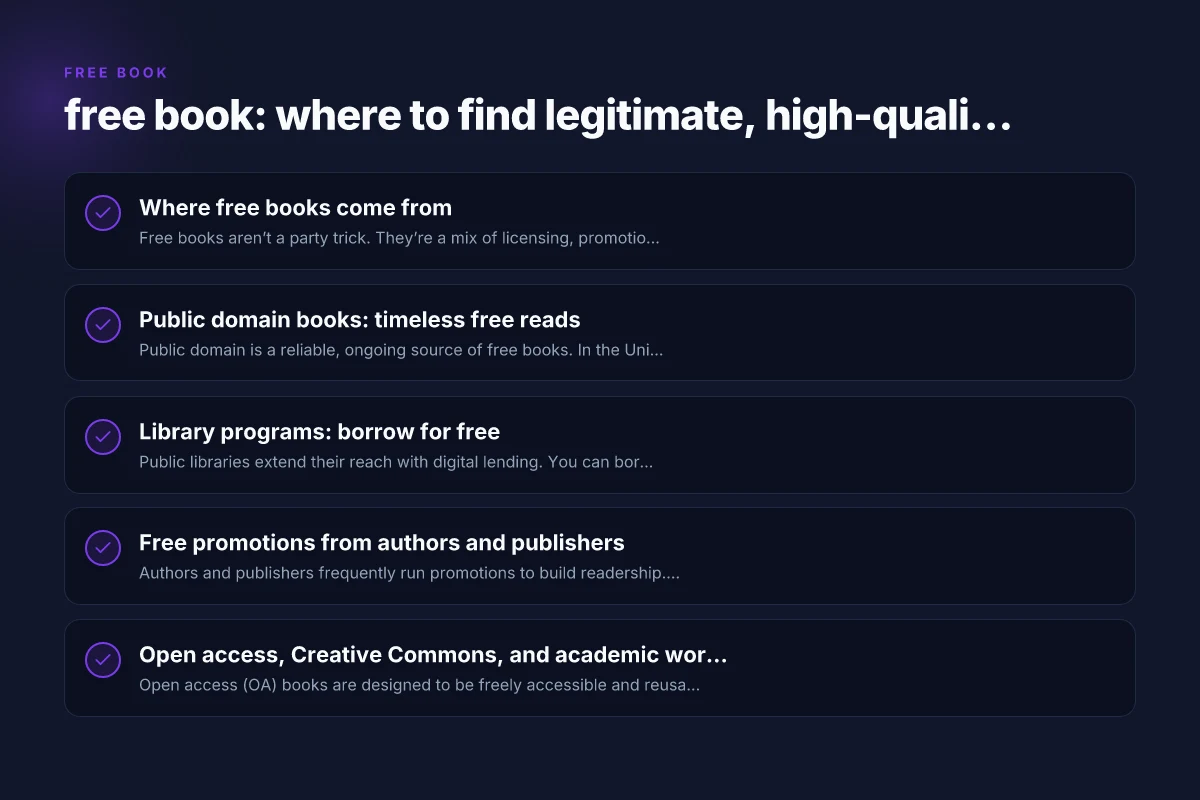
Public domain books: timeless free reads
Public domain is a reliable, ongoing source of free books. In the United States, works published in 1929 or earlier are in the public domain, but many other countries have different timelines. Here’s how to find public domain titles:
- Classic literature and historical texts: Works by Dickens, Austen, Twain, and more.
- Project Gutenberg: A longtime hub offering thousands of free ebooks in multiple formats.
- Internet Archive and HathiTrust: Large repositories with scanned editions and downloadable formats.
- Practical tips: Look for editions labeled “Public Domain” or check the licensing page of each ebook.
Pros: Everything you need to know about how to change IP address using VPN
- No account required for most downloads.
- Wide variety of classic genres.
- Clear licensing and stable availability.
Cons:
- Some titles may feel distant or old-fashioned.
- Formatting quality can vary across sources.
Library programs: borrow for free
Public libraries extend their reach with digital lending. You can borrow ebooks and audiobooks for free using a library card. Key programs:
- OverDrive/Libby: The most common platform for US libraries, offering a wide catalog of current and classic titles.
- Hoopla: Instant access to eBooks, audiobooks, comics, and more with no late fees (items return automatically).
- Libby by OverDrive: A user-friendly app that aggregates library catalogs and manages holds.
- Local library access: Many libraries have digital shelves for kids, teens, and adults, including language learning and non-fiction.
Tips:
- Get a library card even if you only plan to borrow digitally. Many libraries offer online signup.
- Place holds for popular titles to get notified when they’re available.
- Check regional libraries or consortia for broader availability.
Free promotions from authors and publishers
Authors and publishers frequently run promotions to build readership. Look for: Finding the best IP changer online for you
- Free first books or novellas: An entry point to a new series.
- Limited-time free eBooks: Temporarily offered to kick off a marketing push.
- Email newsletters and reader clubs: Signups often come with a free download.
- Bundles and giveaways: Some authors participate in book bundles where you pay what you want or nothing.
How to find these:
- Subscribe to author newsletters and check their websites for “Free” sections.
- Follow publishers on social media or join beta-read groups that release free titles.
- Check ebook retailers’ daily deals and “Free” sections. The availability can be regional.
Be mindful of:
- Short promotion windows. Timing matters.
- Potential regional restrictions, especially for price promotions.
Open access, Creative Commons, and academic works
Open access (OA) books are designed to be freely accessible and reusable. They’re especially common in academic and professional fields.
- Open access publishers: Many universities and institutions publish OA monographs and textbooks.
- Creative Commons licenses: Free distribution with licenses that specify reuse rights, attribution, and modifications.
- Repositories: arXiv, PubMed Central, and institutional repositories host free research books, textbooks, and manuals.
- Educational remixes: Some OA titles allow adaptation for teaching or translation.
Tips: Contact me: A practical guide to reaching out and getting a response
- Use search terms like “open access book,” “free CC BY” or “Creative Commons book.”
- Check license details to know if you can reuse, translate, or remix.
Comparing options: which source suits you?
To help you decide where to look first, here is a quick comparison.
| Source Type | Pros | Cons | Best For |
|---|---|---|---|
| Public domain | Wide catalog, no account needed, classic works | Older language, some formatting quirks | Classic literature, history |
| Library lending | Wide modern catalog, no purchase needed | Requires card, holds, regional limits | Latest fiction and non-fiction |
| Author/publisher promos | Free new titles, discovery-friendly | Time-limited, regional restrictions | New series starters, novellas |
| Open access/CC | Reusable, up-to-date scholarly texts | Narrower in mainstream fiction, discovery varies | Textbooks, research, professional topics |
Practical tips to maximize your free reading
- Set up a single free email address for newsletters to avoid clutter in your primary inbox.
- Create a routine: designate specific days for checking library holds or new OA releases.
- Use multiple devices: download on a tablet for lounge reading and on a laptop for study or research.
- Track licenses and dates: some Free promos expire. Log titles and expiration dates.
- Respect licensing: don’t share library loans beyond your account. Don’t redistribute paid titles marked as free temporarily.
Quick-start action plan
- Get a library card if you don’t already have one, and install Libby or Hoopla.
- Browse the library’s catalog for current popular titles and classic literature.
- Explore Project Gutenberg and Internet Archive for public-domain works you’ve always wanted to read.
- Sign up for author or publisher newsletters to catch new free releases.
- Search for open access or CC-licensed textbooks if you’re studying or teaching.
A short note on legality and ethics
Free books are a wonderful resource, but it’s important to stay on the right side of copyright. Here are some reminders:
- Only download or borrow from legitimate sources that clearly display licensing information.
- If a title is offered for free temporarily, respect the terms and avoid sharing beyond your allowed use.
- Avoid pirated sites. They often host insecure downloads that can harm your device or violate rights.
If you’re ever unsure about a title’s licensing, look for phrases like “Public Domain,” “Creative Commons,” “Open Access,” or explicit statements about borrowing and licensing. When in doubt, stick to well-known platforms like Project Gutenberg, Libby, Hoopla, Internet Archive, or university OA portals.
Recommendations for different reader needs Blog anonymously: Practical guide to writing and sharing content without revealing your identity
- If you love classic novels: Start with Project Gutenberg and Libby for a mix of public-domain and contemporary library picks.
- If you’re a student or researcher: Explore OA books and CC-licensed textbooks. Repositories like arXiv and PubMed Central can be gold mines.
- If you’re exploring a new series: Look for free first-in-series promos from authors or publishers, and use library holds to snag popular titles without cost.
In summary, free books are abundant and accessible through several legitimate channels. By leveraging public domain sources, library lending, author promotions, and open-access materials, you can broaden your reading without spending a cent while supporting creators through appropriate channels. If you’d like, tell me your preferred genres or formats (ePub, Kindle, audiobook, PDF), and I’ll tailor a personalized starter list of free options from each source.