IP vanish

A clear, practical guide to what IP vanish means, how it works, and when to use or avoid it.
IP vanish: understanding what it is and how it works
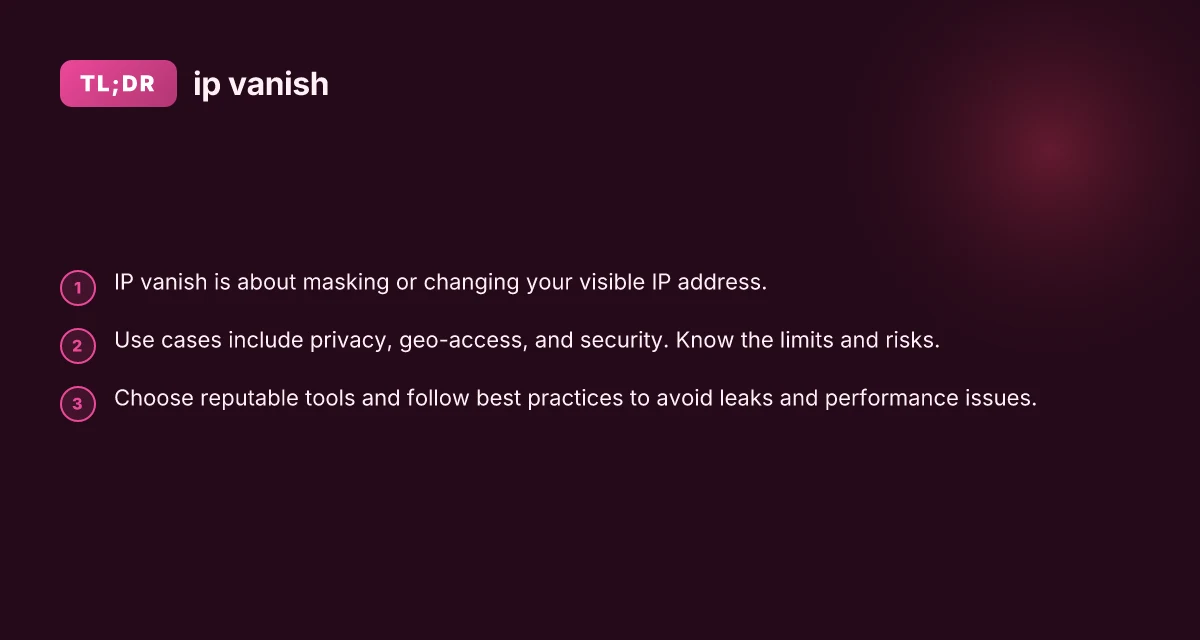
In today’s online landscape, IP vanish is a term you’ll hear a lot. It doesn’t mean your IP literally disappears. It means your visible IP address is concealed or replaced. This is typically achieved through methods like proxies, virtual private networks (VPNs), or the Tor network. The goal is to prevent trackers from seeing your real IP, which can reveal your location, browsing habits, and more. But the exact behavior depends on the method you choose, the configuration you apply, and the apps you use.

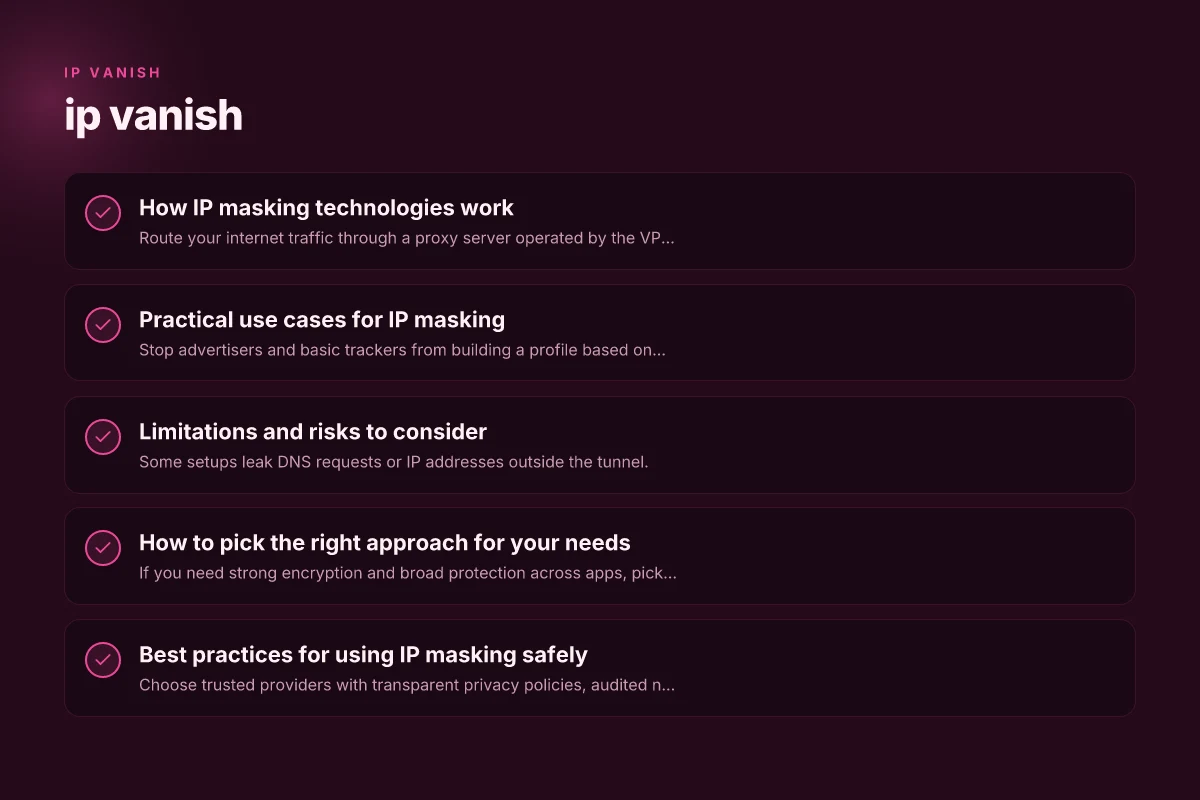
How IP masking technologies work
VPNs
- Route your internet traffic through a proxy server operated by the VPN provider.
- Your device appears to access the internet from the VPN server’s IP.
- Strong VPNs also create an encrypted tunnel, protecting data from local observers.
Proxies
- Act as intermediaries between your device and the internet.
- Can be HTTP/HTTPS or SOCKS5, with varying support for encryption.
- Browsers or apps may be configured to use proxies, but system-wide masking depends on setup.
The Tor network
- Routes traffic through multiple volunteer-operated relays.
- Designed for anonymity, not necessarily speed.
- Balances privacy with potential latency and website blocking risk.
What IP hide does and does not do
- Hides your real IP from websites, services, or trackers you connect to directly.
- Does not automatically protect you from malware, phishing, or compromised devices.
- Does not guarantee complete anonymity. Leaks can occur (DNS leaks, WebRTC leaks, misconfigurations).
Practical use cases for IP masking
Privacy and personal safety
- Stop advertisers and basic trackers from building a profile based on your IP.
- Help reduce targeted phishing or location-based profiling.
- Use on shared networks (cafes, airports) to minimize exposure to observers on the same network.
Accessing geo-restricted content
- Change apparent location to access libraries, streaming catalogs, or services that are limited by region.
- Be mindful of terms of service and licensing restrictions.
Bypassing censorship or monitoring
- In some regions, IP masking can help bypass certain blocks or surveillance.
- Use cautiously and stay informed about local laws and risks.
Security on public Wi-Fi
- A VPN or encrypted tunnel adds a layer of protection against local eavesdropping.
- Still verify device security, update software, and use reputable services.
Limitations and risks to consider
DNS leaks and IP leaks
- Some setups leak DNS requests or IP addresses outside the tunnel.
- Ensure your DNS requests are routed through the same secure path.
WebRTC leaks
- Browsers may reveal your real IP via WebRTC even when a VPN is on.
- Disable WebRTC in settings or use extensions that block leaks.
Trust and provider risk
- With VPNs, you’re routing traffic through the provider’s servers. They can see your activity.
- Choose providers with clear no-logs policies, independent audits, and transparent practices.
Performance impact
- VPNs and Tor can reduce speed due to encryption and routing overhead.
- Proxies can be faster but often offer less security and privacy.
Legal and policy considerations
- Some services prohibit masking your location or using VPNs to access content.
- Violating terms of service can lead to account blocks or penalties.
How to pick the right approach for your needs
| Criterion | VPN | Proxy | Tor |
|---|---|---|---|
| Privacy level | High (with good policy) | Medium to low | High, with trade-offs in speed |
| Encryption | Yes (strong) | Usually no or weak | End-to-end via layered encryption |
| Speed impact | Moderate to significant | Varies, often fastest | Typically slowest due to routing |
| Device coverage | System-wide (multiple devices) | App or browser-based | Browser/app-based routing |
| Trust model | Provider-centric | You control proxy settings | Network of volunteers; varies |
Quick decision guide
- If you need strong encryption and broad protection across apps, pick a reputable VPN.
- If you only need to bypass a geo gate for a browser or a single app and speed matters, consider a high-quality proxy.
- If your primary goal is anonymity and you can tolerate slower speeds, Tor is a viable option, especially for sensitive browsing.
Best practices for using IP masking safely
- Choose trusted providers with transparent privacy policies, audited nobody-logs statements, and clear jurisdiction information.
- Enable kill switches and leak protection features to prevent accidental exposure.
- Test for leaks regularly: check for IP, DNS, and WebRTC leaks using reputable online tools.
- Keep software updated: VPNs, proxies, and browsers should be current to minimize vulnerabilities.
- Be aware of the limits: masks don’t protect against phishing, malware, or compromised devices.
- Separate identities: don’t mix activities that require high security with casual browsing on the same masked connection.
- Read terms of service: ensure your use complies with the provider’s rules and the service you are accessing.
Common mistakes to avoid
- Assuming a masked IP equals complete anonymity.
- Skimping on security features to gain speed.
- Overlooking DNS, WebRTC, or IPv6 leaks.
- Relying on a free service with weak privacy guarantees.
- Overlooking data from apps outside the masked channel (e.g., installed apps on your device leaking data directly).
Recommendations for most users
If your goal is practical privacy and general security without sacrificing too much performance, a reputable VPN is usually the best starting point. It offers system-wide coverage, encryption, and clearer accountability. Before you buy or subscribe:
- Check independent audits or third-party reviews.
- Confirm a robust no-logs policy and transparent data handling.
- Ensure kill switch and DNS leak protection are available and enabled.
- Test for leaks after setup, including on different devices.
- Review pricing, terms, and what happens if you disconnect or switch servers.
If you need targeted browser-based masking with minimal setup and faster speeds, a trusted proxy may suffice, but accept its limitations on encryption and potential leaks. For high-stakes anonymity where speed is less critical, Tor is an option, but plan for slower performance and potential site compatibility issues.
Final thoughts: IP vanish is a useful concept with concrete tools behind it, but it’s not a silver bullet. The best results come from informed choices, careful configuration, and ongoing vigilance against leaks and misconfiguration. If you’d like, I can tailor recommendations to your devices, budget, and risk profile, and walk you through a step-by-step setup for VPN, proxy, or Tor depending on your needs.